Driveway & Hard-Surface Cleaning
The first impression starts outside.
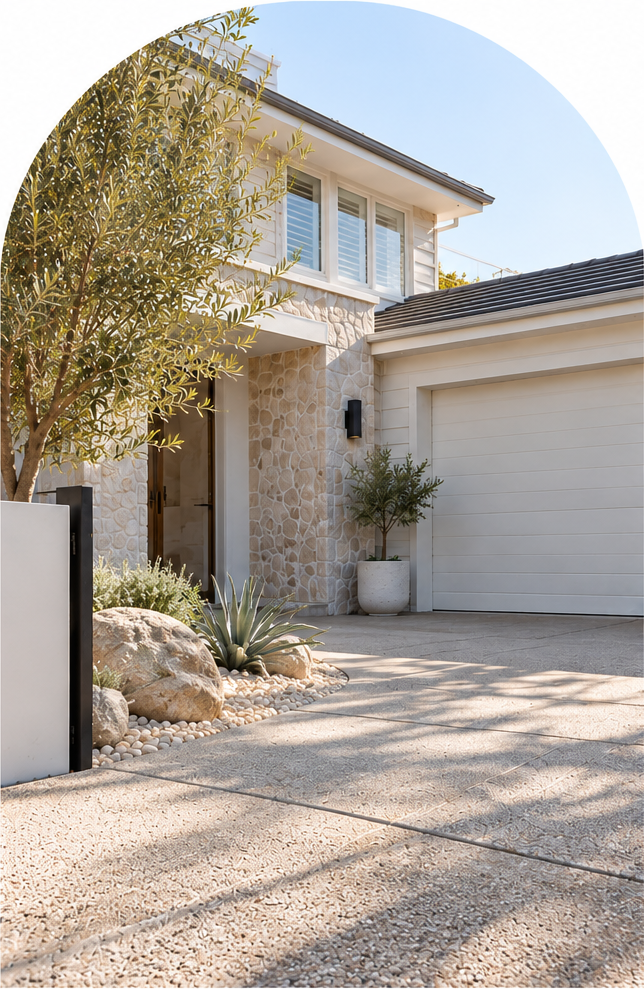
A driveway is often one of the first things noticed when approaching a property. Along with pathways, paved courtyards and entrance areas, it plays a part in how the home looks and feels before anyone steps through the front door.
These surfaces deal with constant exposure. Vehicles, foot traffic, changing weather and surrounding gardens all leave their mark over time. What begins as a little discolouration can gradually become more noticeable, particularly across larger paved areas.
Regular cleaning can help manage this build-up while respecting the materials and finishes that give each outdoor space its character.
Not every surface responds the same way.
The material and condition of each surface determine how cleaning should be approached.
CONCRETE & EXPOSED AGGREGATE
Concrete and exposed-aggregate driveways are durable, but their textured surfaces can trap dirt and organic build-up. Existing sealers, surface wear and the type of staining all need to be considered when selecting a cleaning method.
NATURAL STONE & PAVERS
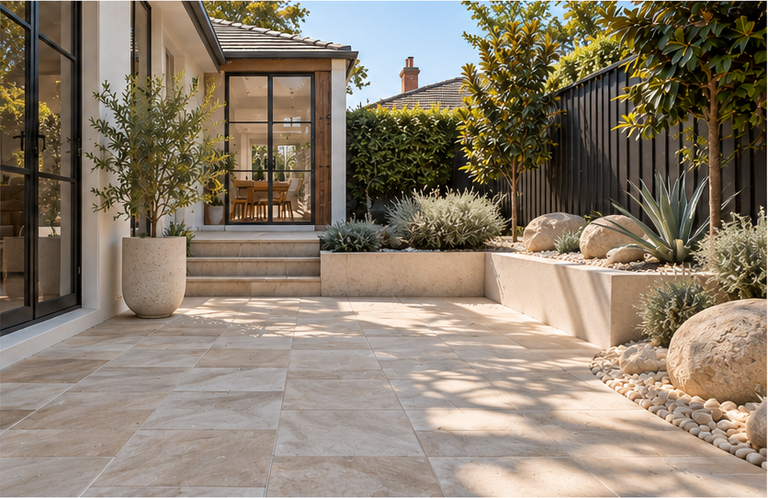
Sandstone, limestone, bluestone and other paving materials have different levels of porosity and sensitivity. Some can be affected by unsuitable chemicals or excessive pressure, making the correct cleaning approach particularly important.
OIL, GREASE & VEHICLE MARKS
Vehicle fluids, tyre marks and everyday spills can leave stubborn discolouration. Some stains penetrate porous surfaces and may not be completely removable, even with specialist cleaning products or additional treatment.
MOULD, ALGAE & LICHEN
Shaded pathways, damp paving and areas near garden beds can develop organic growth. Apart from affecting appearance, some build-up can make surfaces slippery when wet. The extent of growth and surface type influence the treatment required.
JOINTS, EDGES & DRAINAGE
Paved areas often have joints, loose filling material, garden borders or nearby drainage points. Cleaning needs to account for these details to avoid unnecessary disturbance and manage the movement of water and debris.
EXISTING SEALERS & SURFACE WEAR
Previously sealed surfaces can respond differently to cleaning, particularly where the coating has deteriorated. Cleaning may reveal variations in colour, existing damage or uneven wear that were less noticeable beneath accumulated dirt.
Beyond the driveway.
Driveways and paved areas are often connected to other outdoor spaces, from entrance steps and verandahs to entertaining areas and garden pathways.
Where a property has several exterior areas requiring attention, hard-surface cleaning can be combined with Outdoor Cleaning to address the surrounding spaces as part of a broader property refresh.
Explore Outdoor CleaningBefore the cleaning begins.
VEHICLES & CLEAR ACCESS
Vehicles, movable pots and smaller outdoor items should be cleared from the areas being cleaned. Heavy items and fixed structures are not moved as part of the service. Please let us know about restricted access or areas that require particular care.
WATER RUNOFF & SURROUNDINGS
The direction of water runoff, nearby garden beds and drainage points are considered before cleaning begins. Some properties require additional precautions to protect surrounding areas and prevent wash water or debris from entering unsuitable drainage systems.
UNDERSTANDING THE FINISH
Cleaning can improve the appearance of a surface, but it cannot repair cracks, damaged paving, permanent staining or worn coatings. Results depend on the material, its age and condition, and how deeply staining has penetrated.