
Outdoor Cleaning
The spaces beyond the front door.
Outdoor areas are an extension of the home, whether it's a sheltered courtyard, a paved entertaining area or the pathways connecting different parts of a property. Keeping these spaces clean helps preserve their appearance and makes them more enjoyable to use.
Unlike interiors, outdoor surfaces are constantly exposed to changing weather, falling leaves, dust and moisture. Over time, these elements can leave their mark, particularly in areas that receive little sunlight or regular attention.
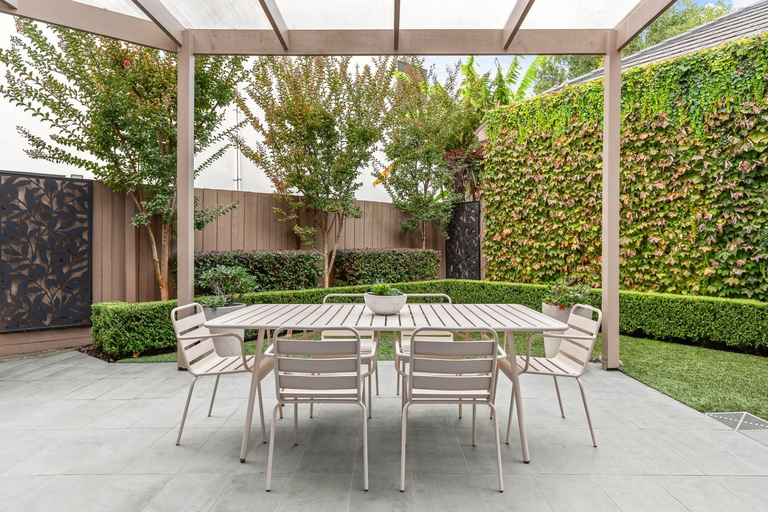
What the weather leaves behind.
Different outdoor surfaces require different cleaning approaches.
THE AREAS RAIN DOESN'T REACH
Covered patios, verandahs and sheltered entrances may be protected from rainfall, but they can still collect dust, cobwebs and airborne debris. Because these areas don't receive a natural rinse, dirt can accumulate unnoticed until the surfaces begin to look dull.
WHEN MOISTURE LINGERS
Shaded corners, poorly drained areas and surfaces surrounded by dense planting can remain damp long after the rest of the property has dried. These conditions may encourage algae and other organic growth, sometimes creating slippery areas that need particular attention.
MORE THAN A SURFACE MARK
Not every stain responds to ordinary cleaning. Rust, oil, mineral deposits and long-standing discolouration can affect different materials in different ways. Some marks may be reduced rather than completely removed, particularly where staining has penetrated the surface.
WHERE THE GARDEN MEETS THE HOME
Leaves, soil and garden debris often accumulate along paving edges, steps and outdoor walls. Nearby plants can also restrict access or contribute to staining. Clearing loose debris and assessing the surrounding area helps determine how the surfaces can be cleaned without unnecessary disturbance.
DELICATE & WEATHERED FINISHES
Natural stone, painted surfaces, older paving and weathered materials may require a gentler approach than more durable finishes. Excessive pressure or unsuitable cleaning methods can cause damage, so the surface condition should be considered before work begins.
ACCESS CHANGES THE JOB
Narrow side passages, outdoor furniture, raised areas and limited water access can affect how cleaning is carried out. Identifying these conditions beforehand helps establish which areas are accessible and whether any preparation is needed.

When outdoor surfaces need closer attention.
Some exterior areas require a more targeted approach, particularly where traffic, vehicles and ongoing exposure have left heavier deposits on hard surfaces.
Driveways, concrete areas and other heavily used surfaces can benefit from a service focused specifically on their condition and cleaning requirements.
Explore Driveway & Hard-Surface CleaningPlanning around the property.
BEFORE AN OCCASION
Outdoor areas often receive extra attention before entertaining, family gatherings or a property presentation. Allowing sufficient time before an event is worthwhile, particularly where surfaces may need time to dry or furniture needs to be returned to position.
FURNITURE & OUTDOOR ITEMS
Pots, furniture, decorative items and other belongings can limit access to the surfaces beneath them. Smaller movable items may need to be cleared before cleaning begins. Heavy furniture and fixed structures are not moved as part of the service.
WEATHER & DRYING TIME
Rain, wind and temperature can influence both the cleaning process and the final result. Some work may need to be rescheduled when conditions are unsuitable, while shaded or porous surfaces can take longer to dry after cleaning.