
HOME & LIVING
The Details That Make a Difference: Creating a Home That Feels Beautifully Cared For
There is something distinctive about walking into a home that feels beautifully cared for. It isn't necessarily the size of the rooms, the quality of the furniture or the amount spent on decorating. More often, it is the quieter details that create a lasting impression.
Natural light falling across a clean surface. The softness of linen against timber. A carefully placed object that brings balance to a room. The sense that everything has its place, without the space feeling overly arranged.
These details may seem small individually, yet together they influence how a home looks, feels and functions.
Creating a welcoming home isn't about achieving perfection. It is about understanding the elements that contribute to a comfortable, cohesive environment and giving them the attention they deserve.
The importance of natural light
Natural light is one of the most influential elements in interior design, affecting the way colours, materials and furnishings appear throughout the day.
A room that receives generous daylight can feel open and inviting, while softer, filtered light can create warmth and intimacy.
Making the most of existing natural light doesn't necessarily require structural changes.
Keeping windows and glass doors clean, choosing window furnishings that allow daylight to filter through and avoiding unnecessarily obstructed windows can make a noticeable difference.
The positioning of furniture also matters. Large pieces placed directly in front of windows can interrupt the flow of light, particularly in smaller rooms.
Even subtle adjustments can change how a space is experienced.
Texture creates warmth and character
A beautiful interior often relies on a balance of textures rather than an abundance of decorative objects.
Timber, linen, stone, wool, ceramics and woven materials each contribute different visual and tactile qualities.
When combined thoughtfully, these materials create depth without overwhelming a room.
A linen sofa against a smooth plaster wall, for example, introduces softness and contrast. A timber table paired with a simple ceramic bowl can feel equally effective.
The key is variation with restraint.
Too many competing textures can make a room feel visually busy, while an entirely uniform selection of finishes may leave it feeling flat.
Choosing a few complementary materials allows their individual qualities to stand out.
The beauty of uncluttered surfaces
Clear surfaces can have a surprisingly strong influence on the atmosphere of a home.
Kitchen benchtops, dining tables, bathroom vanities and entrance consoles are often among the first areas to collect everyday belongings.
Mail, keys, appliances and miscellaneous items gradually accumulate, sometimes without being noticed.
Creating space around the objects that remain allows both the surfaces and their finishes to be appreciated.
This doesn't mean every benchtop needs to be completely empty.
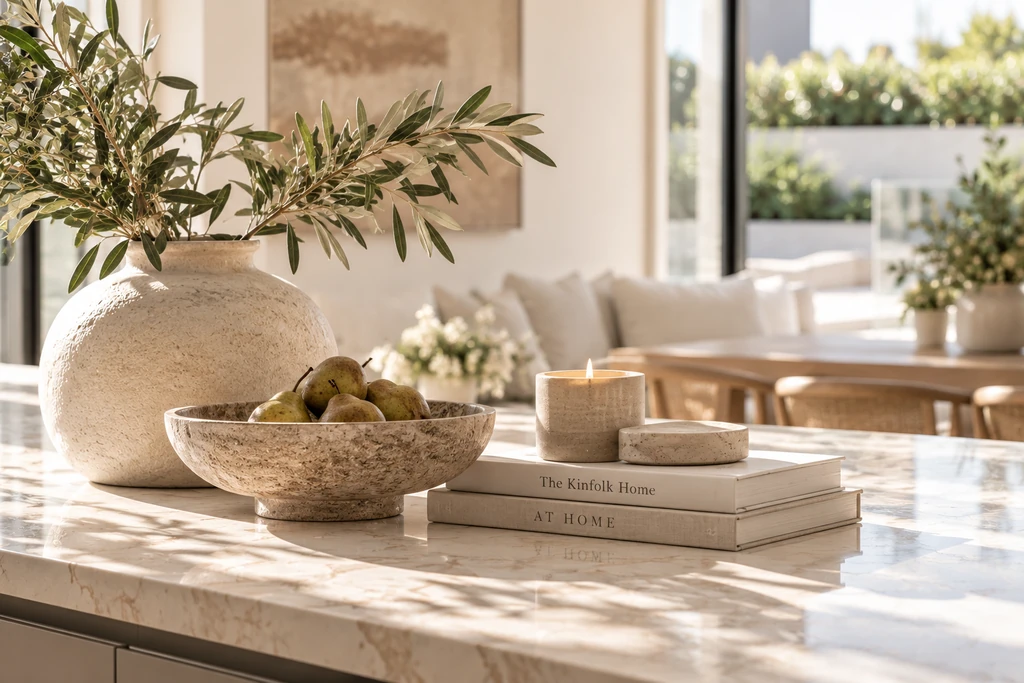
A beautiful stone bowl, a favourite ceramic piece or a small arrangement of carefully selected objects can add personality without creating clutter.
The distinction lies in intention.
When objects are given room to breathe, they tend to have greater visual impact.
Thoughtful styling without overdecorating
A home should reflect the people who live in it, rather than resemble a display room.
Personal photographs, books, collected objects and meaningful pieces can bring character to an interior.
However, displaying everything at once can reduce the impact of individual items.
Grouping a small number of objects with different heights, shapes and finishes often creates a more balanced arrangement.
For example, a low decorative bowl beside a taller vase can introduce variation, while a short stack of books provides a natural base for a smaller object.
The arrangement should feel relaxed rather than overly symmetrical.
It is also worth considering what can be removed.
Sometimes the most effective styling decision is simply to leave an area undisturbed.
Why the condition of materials matters
The beauty of a home is closely connected to the condition of its surfaces and finishes.
Natural stone, timber flooring, painted cabinetry, metal fittings and upholstered furniture all require different approaches to everyday care.
A surface may appear durable while still being vulnerable to unsuitable cleaning products or excessive moisture.
For example, some natural stones can be damaged by acidic cleaners, while certain timber finishes may react poorly to prolonged exposure to water.
Understanding the material is therefore as important as maintaining its appearance.
Following manufacturer guidance, testing unfamiliar products in an inconspicuous area and avoiding abrasive methods can help preserve delicate finishes.
Good home maintenance is not always about doing more. Often, it is about using the right method.
The details that are easily overlooked
Some of the most noticeable improvements in a home come from attending to areas that rarely receive much thought.
Door handles, light switches, window tracks, skirting boards and the edges of frequently used surfaces can gradually show signs of everyday use.
Individually, these details may not attract attention. Collectively, however, they influence the overall impression of a room.
The same applies to furnishings.
Straightening cushions, smoothing throws, removing dust from decorative objects and keeping frequently used areas orderly can help a room feel settled.
These small habits need not become elaborate routines.
A few minutes of attention to the most visible areas can be more effective than attempting to perfect every corner of the home.
Creating a welcoming entrance
The entrance establishes the first impression of a home.
Whether it is a generous hallway or a compact space beside the front door, its presentation influences how the rest of the property is experienced.
A clear pathway, suitable lighting and a practical place for everyday essentials can make an entrance feel both welcoming and functional.
Where space allows, a console table, mirror or carefully chosen decorative piece can introduce character.
However, an entrance should also accommodate daily life.
Shoes, bags, keys and other frequently used items need somewhere practical to belong.
The most successful spaces balance appearance with convenience.
The role of scent and fresh air
The atmosphere of a home is influenced by more than what can be seen.
Fresh air, comfortable temperatures and the absence of persistent odours all contribute to how a space feels.
Where conditions allow, opening windows can help introduce fresh air and reduce the sense of a closed-up room.
It is also important to address the source of unwanted odours rather than relying solely on fragrances to disguise them.
Softly scented candles or diffusers may contribute to the atmosphere of a room, but fragrance is a matter of personal preference.
A subtle approach is generally more comfortable than an overpowering scent, particularly when welcoming guests.
Candles should always be used safely and never left unattended.
A home that works for everyday living
Beautiful interiors are not necessarily the most elaborate.
A thoughtfully maintained home should support the routines of the people who live there.
Storage needs to be practical. Furniture should suit the proportions of the room. Frequently used objects should remain accessible.
A living room that looks appealing but feels uncomfortable to use has missed an important part of its purpose.
Likewise, a kitchen with perfectly arranged surfaces but nowhere convenient to prepare meals may be visually pleasing without being particularly functional.
The most satisfying interiors achieve a balance between presentation and everyday life.
They are spaces that can be enjoyed, rather than constantly preserved.
Small changes can make a meaningful difference
Refreshing the atmosphere of a home does not always require new furniture, major renovations or an entirely different decorating scheme.
Sometimes the most effective improvements involve working with what is already there.
Rearranging a few decorative objects, introducing a different texture, clearing an overlooked surface or adjusting the placement of furniture can change the balance of a room.
These changes also provide an opportunity to appreciate existing materials, furnishings and architectural features.
Rather than continually adding more, it can be useful to consider what already contributes positively to the space.
A home often feels most cohesive when its individual elements have been given room to stand out.
A home that feels like your own
There is no single formula for creating a beautiful home.
Some interiors are minimal and architectural. Others are layered with colour, collected objects and personal history.
What matters is the relationship between the space, its materials and the people who live there.
Attention to natural light, texture, thoughtful arrangement and everyday upkeep can help create an environment that feels comfortable and welcoming.
Ultimately, the details that make the greatest difference are not always the most obvious.
They are the small, thoughtful choices that allow a home to feel cared for, lived in and distinctly its own.