
HOME & LIVING
More Than Cleaning: The Art of Looking After Your Home
A well-maintained home has a quality that goes beyond its appearance. It can be found in the smooth operation of a timber door, the condition of original architectural details, the quiet comfort of a well-ventilated room and the way materials retain their character over time.
These qualities rarely happen by accident.
While regular cleaning plays an important role in keeping a home comfortable, caring for a property involves something broader. It requires an understanding of how different materials age, how seasonal conditions affect a building and why small signs of wear deserve attention.
Whether a home is newly built, recently renovated or more than a century old, thoughtful property care can help preserve both its character and its functionality.
Understanding the home beyond its surfaces
Every home is made up of interconnected elements.
Flooring, walls, windows, joinery, roofing, drainage and ventilation all contribute to how a property performs.
While some areas are visible and used every day, others tend to receive attention only when something goes wrong.
A window that becomes difficult to open, a door that begins to catch or a small patch of discolouration on a ceiling may seem insignificant at first.
However, changes like these can sometimes indicate developing issues.
Understanding what is normal for a property makes it easier to recognise when something requires closer inspection.
This doesn't mean every minor imperfection is cause for concern. Buildings naturally move, materials expand and contract, and finishes change with age.
The value lies in recognising the difference between ordinary wear and changes that warrant investigation.
Preserving the character of different materials
One of the most important aspects of home maintenance is understanding that materials have different needs.
Natural timber, stone, brickwork, plaster, metal and modern composite finishes respond differently to moisture, sunlight, temperature and everyday use.
Timber, for example, may expand or contract with changes in humidity. Some natural stones can be sensitive to acidic substances, while older decorative plasterwork can be vulnerable to excessive moisture or unsuitable repairs.
A cleaning or maintenance method that works well on one surface may damage another.
This is particularly relevant in renovated heritage homes, where original architectural features often sit alongside contemporary materials.
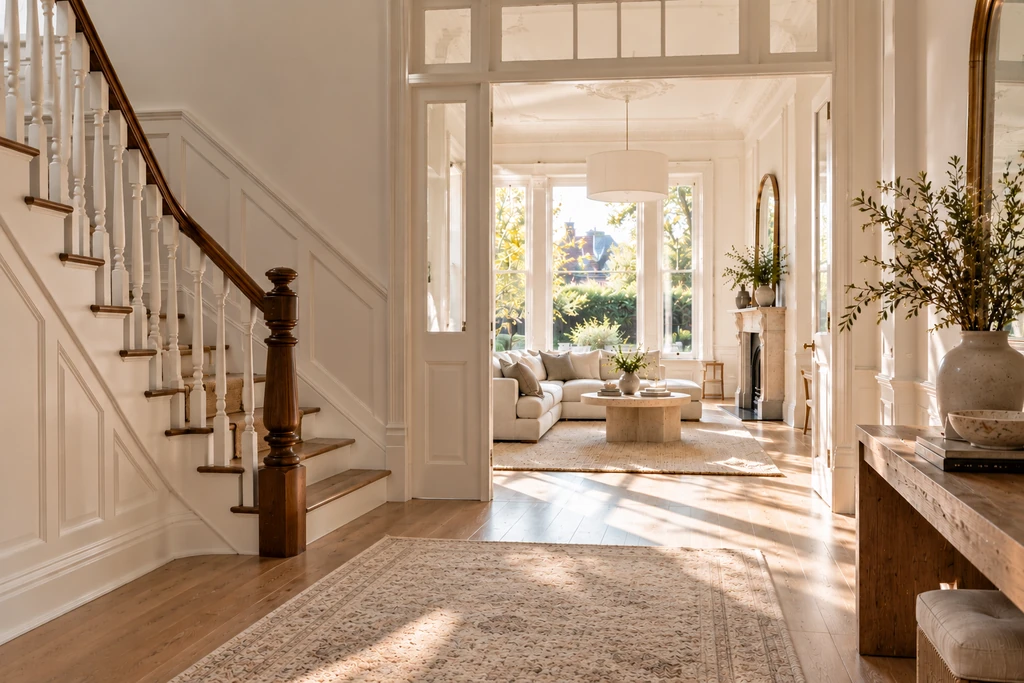
A restored timber staircase, decorative ceiling rose or original fireplace surround may require a different approach from newly installed cabinetry or modern flooring.
Preserving these elements begins with identifying the materials involved and following suitable care recommendations.
Where a finish is unusual, fragile or historically significant, specialist advice is preferable to experimenting with unfamiliar products or repair techniques.
Why preventative maintenance matters
Many property problems develop gradually.
A leaking tap, deteriorating seal, blocked drainage point or damaged exterior coating may initially appear minor.
Left unattended, some of these issues can contribute to moisture damage, staining or deterioration of surrounding materials.
Preventative maintenance involves identifying potential problems early and addressing them before they become more disruptive.
It can be as straightforward as checking that doors and windows close correctly, keeping accessible drainage points clear of debris or arranging an inspection when unexplained dampness appears.
The aim is not to anticipate every possible repair.
Rather, it is to develop an awareness of the property's condition and respond appropriately when something changes.
Maintenance is often most effective when it becomes a regular part of looking after a home, rather than something reserved for emergencies.
The influence of Melbourne's changing seasons
Homes in Melbourne experience a wide range of conditions throughout the year.
Hot summer days, cool winters, heavy rainfall and periods of strong wind can all affect different parts of a property.
Seasonal changes are therefore a useful reminder to review areas that may have been overlooked.
During autumn, fallen leaves and garden debris can accumulate around outdoor drainage points.
Winter may reveal draughts, condensation or moisture issues that are less noticeable during warmer months.
Spring provides an opportunity to inspect outdoor areas following winter weather, while summer can place additional demands on cooling systems and expose exterior finishes to prolonged sunlight.
A seasonal approach to home maintenance does not need to involve an extensive list of tasks.
It simply encourages regular attention to the areas most likely to be affected by changing conditions.
Roofing, elevated gutters, electrical systems and other hazardous or regulated work should always be inspected or maintained by appropriately qualified professionals.
Moisture: one of the most important things to monitor
Moisture can affect a property in ways that are not immediately obvious.
Persistent condensation, musty odours, peeling paint, swollen cabinetry or unexplained staining may indicate that water or humidity is affecting the surrounding materials.
These signs do not always point to a serious problem, but they should not be ignored.
Moisture may result from plumbing leaks, inadequate ventilation, water entering from outside or condensation on cold surfaces.
Because the causes vary, the appropriate response also varies.
Simply painting over a stain or repeatedly wiping away visible mould will not resolve an underlying moisture problem.
The source needs to be identified and addressed.
Where mould growth is extensive, recurring or associated with suspected water damage, appropriate professional assessment may be necessary.
Good ventilation, prompt attention to leaks and regular observation of moisture-prone areas can help reduce the likelihood of ongoing deterioration.
Caring for original architectural features
Older homes often contain details that contribute significantly to their character.
Decorative cornices, ceiling roses, timber fretwork, fireplaces, stained glass and traditional joinery are examples of features that may have survived generations of use.
These elements deserve particular consideration during cleaning, maintenance and renovation.
Original finishes may be more delicate than they appear, and aggressive cleaning methods can remove or damage material that is difficult to replace.
Older paintwork, for example, may contain lead, while some historic building materials can contain asbestos. Suspected hazardous materials should not be disturbed without appropriate professional advice.
Where repairs are required, retaining sound original material is often preferable to unnecessary replacement.
For heritage-listed or otherwise protected properties, certain alterations may also require approval.
The objective is to preserve the qualities that make the home distinctive while allowing it to remain comfortable and practical for modern living.
Looking after outdoor spaces
The condition of a home extends beyond its interior.
Paths, decks, fences, garden beds, drainage areas and exterior surfaces all contribute to the property's overall condition.
Outdoor materials are continually exposed to weather, moisture and changes in temperature.
Timber decking may require periodic inspection for loose fixings or deteriorating boards. Paved areas can develop movement or uneven sections, while vegetation may gradually obstruct pathways or drainage.
Garden maintenance also plays a role in protecting the building itself.
Plants growing too close to walls can restrict access for inspection, while excessive vegetation may conceal damaged surfaces or moisture problems.
Keeping outdoor areas maintained makes it easier to notice changes before they become more significant.
Specialist tree work, structural repairs and regulated building work should be referred to suitably qualified professionals.
The value of keeping property records
A useful but frequently overlooked part of home ownership is maintaining a record of the property's history.
Renovation details, appliance manuals, paint colours, flooring specifications, warranties and records of completed repairs can all become valuable over time.
These documents make it easier to identify suitable maintenance products, arrange future repairs and understand what work has previously been undertaken.
For example, knowing the exact finish applied to a timber floor can help prevent the use of an unsuitable cleaning product.
Similarly, retaining information about waterproofing, roofing or drainage work can assist when investigating a future issue.
A simple digital folder organised by room or area of the property is often sufficient.
The important part is ensuring that information remains accessible when it is needed.
Small habits that support long-term care
Looking after a home does not need to become an overwhelming undertaking.
Many useful habits involve observation rather than extensive physical work.
Taking a moment to notice changes in a room, checking areas that are rarely used and responding promptly to unusual conditions can all contribute to better long-term care.
It is also helpful to distinguish between tasks that can be managed safely and those that require specialist knowledge.
Routine housekeeping, organising storage and visually checking accessible areas are different from investigating electrical faults, repairing plumbing or working at height.
Knowing when to seek qualified assistance is part of responsible property maintenance.
A home benefits most from attention that is consistent, appropriate and suited to its individual characteristics.
A home that evolves over time
No home remains unchanged.
Materials develop patina, gardens mature, finishes gradually wear and the needs of the people living within the property evolve.
These changes are not necessarily undesirable.
A timber floor may acquire subtle signs of use. A well-maintained garden may become more established and layered. Original architectural features may gain character with age.
The purpose of home care is not to prevent every sign of time.
It is to distinguish between natural ageing and avoidable deterioration, preserving what makes the property special while allowing it to remain functional.
This approach is particularly valuable in homes that combine old and new elements, where maintaining balance requires an appreciation of both.
Looking after more than appearances
A beautifully cared-for home is not defined solely by spotless surfaces or carefully arranged interiors.
Its condition is reflected in the less visible details: materials that have been treated appropriately, maintenance issues addressed in good time and original features preserved with care.
Cleaning, preventative maintenance and an understanding of the building all play different but complementary roles.
Together, they help create a home that remains comfortable, functional and distinctive through the years.
Ultimately, looking after a home is an ongoing relationship with the place itself — one that values its history, respects its materials and allows it to be enjoyed for years to come.